

If a reporter called you today and asked you to share a real-life testimony from someone who has been served well by your organization or ministry — a story that provides a great account of how you’re fulfilling your mission — how fast could you respond?
Having worked with hundreds of nonprofits, I can count on one hand those that had a formal archival system in place where they stewarded their stories for the future. So, if your organization or ministry does not have a system in place for keeping an account of the stories that highlight the events and people you serve, you’re not alone.
Stories validate the essence of your mission.
Here’s a good rule of thumb to remember — people love a good story and they’re often the ones who share it with someone else through referral. It’s how you can build new relationships.
And the good news is that people love a good story because it’s easier to retain than a list of unique selling propositions. Stories are human and relational and memorable.
And your people [supporters, volunteers, staff, board, alumni] love to hear your organization, ministry or church’s story because you’re on a mission they care about. And stories confirm for them that you’re fulfilling your mission.
So being mindful and diligent in keeping track of your nonprofit’s stories is part of the job . Your team has been called on a mission and keeping track of the stories that happen in the day in and day out of your work takes commitment. Because you can’t share what you don’t know.
Storytelling is missional and it can eternally change people’s lives if captured and shared.
Cherished memories can be forgotten.
Just like anything else, your organization’s stories can be forgotten, or the content can become diluted over time. The only way to keep the amazing details and dynamics is to store them in a secure, yet accessible place for safekeeping.
Making the decision to create the infrastructure for archiving your organization’s stories and history, actually takes very little time. First, we recommend that you formalize a redundant digital file system in your onsite network that is automated to back up to the cloud. That’s double-duty insurance.
Digitally scanning historical hard-copy documents and photos can take some work, but it’s worth the trouble when you need to use these elements in your storytelling.
Creating an archive file protocol.
For each story, collecting and saving as many aspects and artifacts that verify the story, right after it happens, can eliminate a future hunting expedition to pull the pieces together when you’re ready to share the story with supporters.
Here’s a basic digital file structure for archiving stories:
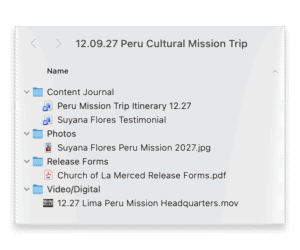
Within this archival structure you will be filing the content, photos, release forms for the photos, and video/digital footage in one primary folder that’s searchable by date and name.
If you haven’t already, establishing the legal form and process for obtaining the appropriate release authorization from those whose stories are being told is professional, legal, and respectful.
It takes a village.
Everyone on your team, including volunteers, need to understand the part they play in capturing your stories. That takes a decision from leadership and a regular accounting of progress.
So, if you haven’t already, start by asking yourself, how best can your team express your mission through stories? And what archival system can be established to make the process easy and rewarding. Today is a good day to begin the process.
Consider These Cahoots Courses
Subscribers can watch these Cahoots Courses that instruct you in how to use all the story elements you archive:
What’s Your Story? Five Ways to Tell Your Story
Features five of the most common styles of storytelling and provide the tools in determining which styles are best for your nonprofit’s communications.
Copy That! Your Formula for Writing Great Content
Provides the formula for writing copy worth reading and how that translates into your storytelling voice and engaging your audiences.
Increasing Your Appeal – Seven Ways to Solicit Support
Outlines what makes a good appeal and the seven steps needed to increase your appeal’s support.